Spouse and Child Visas: What “Dependant” Means on Different Routes
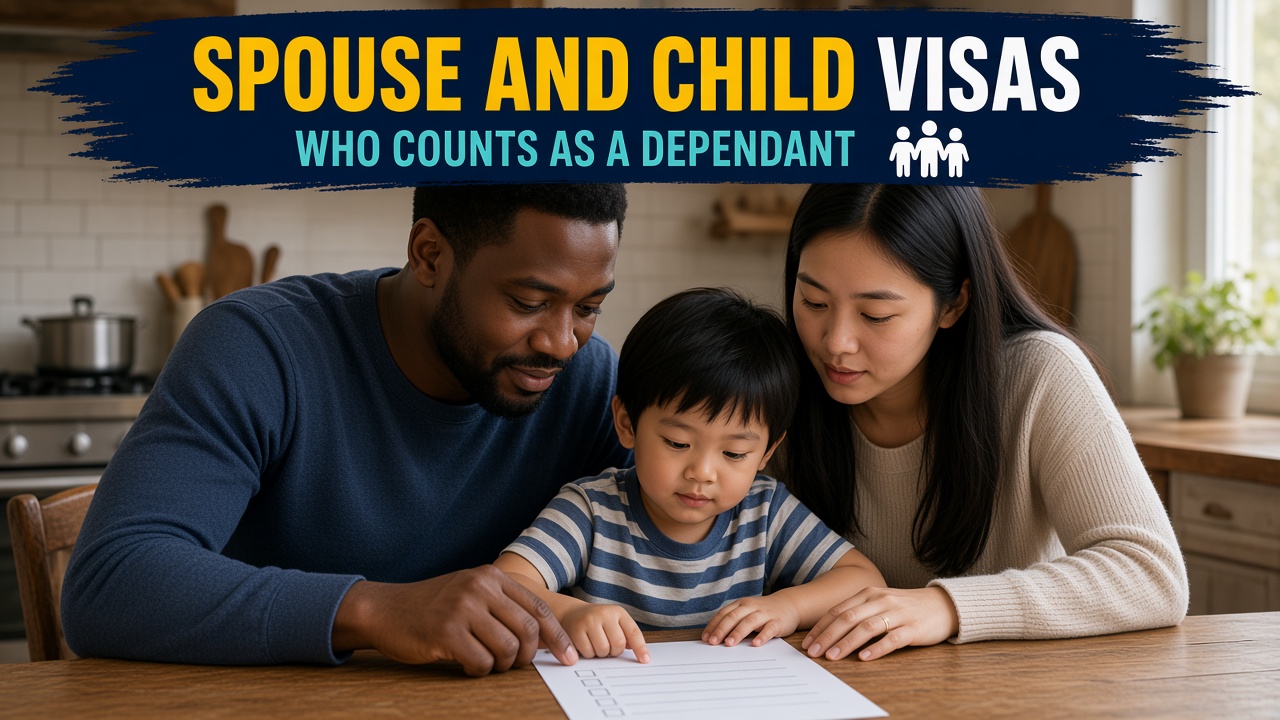
On a UK Skilled Worker visa, a dependant is a defined person, not anyone in your household. Your partner and your child each file their own application. Their visa, if granted, usually ends when yours does. If the parents’ visas end on different dates, the child’s ends on the earlier one. The definitions and the money figures below are from GOV.UK’s Skilled Worker dependants page on 25 September 2026. They are not the rules for a Student visa, and they are not a family-visa guide for other countries. Whether your own job meets the Skilled Worker tests is in the UK Skilled Worker visa.
Who the route calls a partner or a child
A dependant partner is a husband, wife, civil partner, or unmarried partner. You prove a marriage or civil partnership that the UK recognises, or that you have been living together in a relationship for at least two years when you apply, or that you have been in a relationship for at least two years but cannot live together, for example because of work, study, or a cultural reason. If you are not living together, you still have to show an ongoing commitment, such as regular contact, financial support, care of children you have together, or time spent together.
A child dependant is your child under 18, including a child born in the UK during your stay, or your child over 18 who already has permission to be in the UK as your dependant. The child must live with you, unless they are away in full-time education, and must not be married or in a civil partnership. A child born in the UK is not automatically a British citizen. You apply for a dependant visa if you want to travel with them, and you apply before they turn 18 if they are to stay on that basis. You provide a full UK birth certificate naming both parents.
The same word does not apply to every job
Care workers and senior care workers, and people in medium-skilled occupation codes, do not all have the same family rules as other Skilled Worker jobs. Partners and children outside the UK can join a care worker or senior care worker only in the cases the page lists, including where the worker has been continually employed in that role on a Skilled Worker visa since before 11 March 2024, or the child was born in the UK. Medium-skilled jobs have a similar limit tied to employment since before 22 July 2025, again with narrow exceptions, including a child born in the UK. A higher-skilled job is not those lists. Read the occupation against that page before you assume a partner can apply.
Money, work, and a separate file
Unless an exemption applies, the page says you or they need £285 for a partner, £315 for one child, and £200 for each additional child, held for 28 days in a row, with day 28 within 31 days of the application. Your own application still uses the £1,270 figure. The family amount is on top of that in the example GOV.UK gives for a partner and one child, which is £600 for them. You may not have to show the family funds if you have all been in the UK on a valid visa for at least 12 months, or if the employer certifies the family’s first-month costs on your certificate of sponsorship.
A partner or child who is granted the visa can work, except as a sportsperson or coach, and can study. They cannot claim most public funds. Settlement after five years is another application, and only if they meet the other requirements. They cannot switch onto your visa as dependants from a visit visa, a short-term student visa, or several other permissions the page names. A partner or child on a Student visa can switch only if they have completed the sponsored course, or have studied for a PhD for at least 24 months.
Each person pays a visa fee and proves their identity. A decision is usually about three weeks from outside the UK and about eight weeks from inside. Those are processing times, not an approval.